✼ ҉ حسام الـבین شـ؋ـیعیان ҉ ✼
✐✎✐ وبلاگ رسمے و شخصے حسام الـבین شـ؋ـیعیان ✐✎✐✼ ҉ حسام الـבین شـ؋ـیعیان ҉ ✼
✐✎✐ وبلاگ رسمے و شخصے حسام الـבین شـ؋ـیعیان ✐✎✐





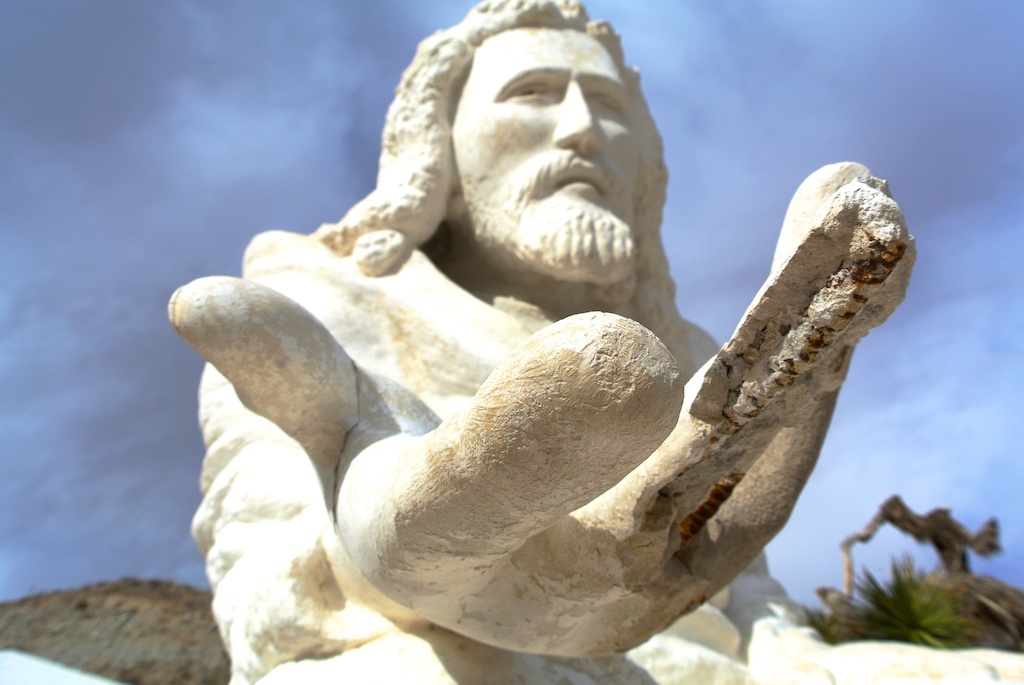
Miracles of Jesus
Christian authors also view the miracles of Jesus not merely as acts of power and omnipotence, but as works of love and mercy, performed not with a view to awe by omnipotence, but to show compassion for sinful and suffering humanity.[35][39] And each miracle involves specific teachings.[40]
Since according to the Gospel of John,[20:30] it was impossible to narrate all of the miracles performed by Jesus, the Catholic Encyclopedia states that the miracles presented in the Gospels were selected for a twofold reason: first for the manifestation of God's glory, and then for their evidential value. Jesus referred to his "works" as evidences of his mission and his divinity, and in John 5:36 he declared that his miracles have greater evidential value than the testimony of John the Baptist.[35] John 10:37–38 quotes Jesus as follows:[41]
Do not believe me unless I do what my Father does. But if I do it, even though you do not believe me, believe the miracles, that you may know and understand that the Father is in me, and I in the Father.
In Christian teachings, the miracles were as much a vehicle for Jesus' message as his words. Many emphasize the importance of faith, for instance in cleansing ten lepers,[Lk 17:19] Jesus did not say: "My power has saved you," but said:[42][43]
Rise and go; your faith has saved you.
Similarly, in the miracle of walking on water, Apostle Peter learns an important lesson about faith in that as his faith wavers, he begins to sink.[Mt 14:34–36] [44]
New Testament scholar Bart Ehrman argues that what makes science possible is the assumption of the uniformity of the laws of nature, but given that miracles are by definition events that go against the usual way nature works, historians are virtually unable to confirm or refute reports of Jesus' miracles.[56]
Jesus Heals Peter's Mother-in-Law Sick With Fever
Jesus Heals Many Sick and Oppressed at Evening
Jesus Heals a Centurion's Paralyzed Servant in Capernaum
Jesus Heals a Paralytic Who Was Let Down From the Roof
Jesus Heals a Man's Withered Hand on the Sabbath
Jesus Raises a Widow's Son From the Dead in Nain
Jesus Calms a Storm on the Sea
Jesus Heals a Woman in the Crowd With an Issue of Blood
Jesus Raises Jairus' Daughter Back to Life
Jesus Heals Two Blind Men
Jesus Heals a Man Who Was Unable to Speak
Jesus Heals an Invalid at Bethesda
Jesus Walks on Water
Jesus Heals Many Sick in Gennesaret as They Touch His Garment
Jesus Heals a Gentile Woman's Demon-Possessed Daughter
Jesus Heals a Deaf and Dumb Man
Jesus Withers the Fig Tree on the Road From Bethany
Jesus Heals a Man Born Blind by Spitting in His Eyes
Jesus Calms a Storm on the Sea
Jesus Heals a Centurion's Paralyzed Servant in Capernaum
(See Matthew 8:14-15; Mark 1:29-31; Luke 4:38-39) After Jesus healed the possessed man in the synagogue in Capernaum, He and His disciples went over to Simon and Andrews home, where they found Simons mother-in-law sick in bed with a high fever. Jesus took her by the hand and helped her sit up, the fever suddenly left, and she got up and prepared dinner for them.
(See Matthew 8:16; Mark 1:32; Luke 4:40-41) After Jesus healed Peter's mother-in-law in Capernaum, Jesus healed many people during the evening of all kinds of illnesses. As explained in the Gospel of Luke: "At sunset, the people brought to Jesus all who had various kinds of sickness, and laying his hands on each one, he healed them. Moreover, demons came out of many people, shouting, 'You are the Son of God!' But he rebuked them and would not allow them to speak, because they knew he was the Messiah" (Luke 4:40-41, NIV).
(See Matthew 9:20-22; Mark 5:25-34; Luke 8:43-48) A woman who had been suffering from hemorrhages for twelve years, and had spent all that she had on many physicians, and was no better, but rather grew worse, had heard about Jesus, and came up behind Him in a crowd and touched His cloak. For she said "If I but touch His clothes, I will be made well". Immediately her hemorrhage stopped, and she felt in her body that she was healed of her disease. Jesus was aware that power had gone forth from Him, turned around and asked "Who touched My clothes?" The woman knowing what happened to her, came in fear and trembling, fell down before Him, and told Him the whole truth. Jesus said to her "Daughter, your faith has made you well, go in peace, and be healed of your disease."
(See Matthew 9:18-19, 23-25; Mark 5:22-24, 35-43; Luke 8:41-42, 49-56) A leader of the synagogue named Jairus came to Jesus, and begged Him to come and lay hands on his little daughter who was near death. As Jesus went, the crowds pressed in on Him and He felt power had gone forth from Him. It was at this point He healed the woman who had been hemorrhaging for twelve years (see miracle 13). While He was still speaking to the woman, someone came from Jairus' house and told him his daughter had died. When Jesus heard about this He replied "Do not fear. Only believe, and she will be saved." Jesus entered the house with Peter, John, James, and the child's father and mother. The people in the house were all weeping and wailing for her, but Jesus said "Do not weep, for she is not dead but sleeping." He then took her by the hand and called out "Child get up." Her spirit returned, and she got up at once. Then He directed them to give her something to eat. Her parents were astounded, but He ordered them to tell no one what happened.
(See Matthew 9:27-31) Two blind men followed Jesus, crying loudly, "Have mercy on us, Son of David!" Jesus said to them "Do you believe I am able to do this?" They said to Him "Yes, Lord." Then He touched their eyes and said "According to your faith let it be done to you." And their eyes were opened. Then Jesus sternly ordered them "See that no one knows of this." But they went away and spread the news about Him throughout that district.
(See Matthew 9:32-33) After the two healed blind men in miracle 15 left, a demoniac who was mute was brought to Jesus. And when Jesus cast the demon out, the one who had been mute spoke, and the crowds were amazed and said they had never seen anything like this in Israel.
(See John 5:5-17) Jesus saw a man who had been ill for 38 years, laying by the pool of Bethesda. Jesus knew the man had been ill for a long time and asked him if he wanted to made well. The sick man answered Him that he had no one to put him in the pool when the water is stirred up, and while he is making his way, someone else steps down ahead of him. Jesus told the man "Stand up, take your mat and walk." The man was made well at once, and he took up his mat and began to walk. Note: Crowds of sick people lay on the platforms by the pool, waiting for a certain movement of the water, for an Angel of the Lord came from time to time and disturbed the water, and the first person to step down into it afterwards was healed. The Jewish leaders started persecuting Jesus for He worked on the Sabbath in doing this miracle, and telling the man to carry his mat. Jesus replied "My Father is still working, and I also am working."
(See Matthew 14:16-21; Mark 6:35-44; Luke 9:12-17; John 6:5-14) A large crowd gathered around Jesus at a deserted place on the shore of the Sea of Galilee. It was late and the people had no food. Jesus told His disciples to give them something to eat. They replied there is nothing here but five barley loaves and two fish that was carried by a boy. Jesus had the food brought to Him, and ordered the crowds to sit on the grass. Then He took the five loaves and two fish, and looked up into Heaven, and blessed and broke the loaves, and gave them to His disciples to set before the people, and He divided the two fish among them all. The food was multiplied, and all 5000 men and their families ate and were filled. What was left over was gathered up, twelve baskets of broken pieces. This miracle is recorded in all four Gospels.
(See Matthew 14:22-33; Mark 6:45-52; John 6:16-21) After feeding the 5000, Jesus made His disciples get into a boat and go ahead to the other side of the Sea of Galilee. He then dismissed the crowds and went up the mountain by Himself to pray. By this time the boat was far from land, and was being battered by wind and waves. Early in the morning He came walking towards His disciples on the sea. When His disciples saw Him walking on the sea, they were terrified, saying "Its a ghost." But Jesus spoke to them "Take heart, it is I, do not be afraid." Peter answered Him "Lord if its You, command me to come to You on the water." Jesus told Him to come, and Peter got out of the boat and started walking on the water. But when he noticed the strong wind, he became frightened and beginning to sink he cried out to Jesus to save him. Jesus immediately reached out His hand and caught him, saying to him "You of little faith, why did you doubt?" When they got into the boat the wind ceased. And those in the boat worshiped Him, saying "Truly You are the Son of God."







+“✝Christianity“✝+Miracles of Jesus+
The miracles of Jesus are proposed miraculous deeds attributed to Jesus in Christian and Islamic texts. The majority are faith healings, exorcisms, resurrections, and control over nature.[1][2]
In the Synoptic Gospels (Mark, Matthew, and Luke), Jesus refuses to give a miraculous sign to prove his authority.[clarification needed][3] In the Gospel of John, Jesus is said to have performed seven miraculous signs that characterize his ministry, from changing water into wine at the start of his ministry to raising Lazarus from the dead at the end.[4]
In The Miracles of Jesus, H. Van der Loos describes two main categories of miracles attributed to Jesus: those that affected people, e.g., the Blind Man of Bethsaida and are called "healings", and those that "controlled nature", e.g., Walking on Water. The three types of healings are cures where an ailment is cured, exorcisms where demons are cast away and the resurrection of the dead. Karl Barth said that, among these miracles, the Transfiguration of Jesus is unique in that the miracle happens to Jesus himself.[10]
According to Craig Blomberg, one characteristic shared among all miracles of Jesus in the Gospel accounts is that he delivered benefits freely and never requested or accepted any form of payment for his healing miracles, unlike some high priests of his time who charged those who were healed.[11] In Matthew 10:8 he advised his disciples to heal the sick without payment and stated: "freely ye received, freely give."[11]
It is not always clear when two reported miracles refer to the same event. For example, in the healing the centurion's servant, the Gospels of Matthew[8:5–13] and Luke[7:1–10] narrate how Jesus healed the servant of a centurion in Capernaum at a distance. The Gospel of John[4:46–54] has a similar but slightly different account at Capernaum, and states that it was the son of a royal official who was cured at a distance.
The largest group of miracles mentioned in the New Testament involves cures. The Gospels give varying amounts of detail for each episode, sometimes Jesus cures simply by saying a few words, at other times, he employs material such as spit and mud. Generally they are referred to in the Synoptic Gospels but not in the Gospel of John.
The canonical Gospels tell a number of stories of Jesus healing blind people. The earliest is a story of the healing of a blind man in Bethsaida in the Gospel of Mark.[12]
Mark's Gospel also has an account of the healing of a man named Bartimaeus, done as Jesus is leaving Jericho.[13] The Gospel of Matthew[14] has a simpler account loosely based on this, with two unnamed blind men instead of one (this 'doubling' is a characteristic of Matthew's treatment of the Mark text) and a slightly different version of the story, taking place in Galilee, earlier in the narrative.[15] The Gospel of Luke tells the same story of Jesus healing an unnamed blind man, but moves the event in the narrative to when Jesus approaches Jericho.[16][17]
Mark's Gospel also has an account of the healing of a man named Bartimaeus, done as Jesus is leaving Jericho.[13] The Gospel of Matthew[14] has a simpler account loosely based on this, with two unnamed blind men instead of one (this 'doubling' is a characteristic of Matthew's treatment of the Mark text) and a slightly different version of the story, taking place in Galilee, earlier in the narrative.[15] The Gospel of Luke tells the same story of Jesus healing an unnamed blind man, but moves the event in the narrative to when Jesus approaches Jericho.[16][17]
A story in which Jesus cures a leper appears in Mark 1:40–45, Matthew 8:1–4 and Luke 5:12–16. Having cured the man, he instructs him to offer the requisite ritual sacrifices as prescribed by the Deuteronomic Code and Priestly Code, and not to tell anyone who had healed him; but the man disobeyed, increasing Jesus' fame, and thereafter Jesus withdrew to deserted places, but was followed there.
Healing the paralytic at Capernaum appears in Matthew 9:1–8, Mark 2:1–12 and Luke 5:17–26. The Synoptics state that a paralytic was brought to Jesus on a mat; Jesus told him to get up and walk, and the man did so. Jesus also told the man that his sins were forgiven, which irritated the Pharisees. Jesus is described as responding to the anger by asking whether it is easier to say that someone's sins are forgiven, or to tell the man to get up and walk. Mark and Luke state that Jesus was in a house at the time, and that the man had to be lowered through the roof by his friends due to the crowds blocking the door.
The cure of a bleeding woman miracle appears in Mark 5:21–43, Matthew 9:18–26 and Luke 8:40–56, along with the miracle of the Daughter of Jairus.[18] The Gospels state that while heading to Jairus' house Jesus was approached by a woman who had been bleeding for 12 years, and that she touched Jesus' cloak (fringes of his garment) and was instantly healed. Jesus turned about and, when the woman came forward, said "Daughter, your faith has healed you, go in peace".
Healing the mother of Peter's wife. The Synoptics[19] describe Jesus as healing the mother-in-law of Simon Peter when he visited Simon's house in Capernaum, around the time of Jesus recruiting Simon as an Apostle (Mark has it just after the calling of Simon, while Luke has it just before). The Synoptics imply that this led other people to seek out Jesus.
The healing of a man with dropsy is described in Luke 14:1–6. In this miracle, Jesus cured a man with dropsy at the house of a prominent Pharisee on the Sabbath. Jesus justified the cure by asking: "If one of you has a child or an ox that falls into a well on the Sabbath day, will you not immediately pull it out?"